

Maybe, like me, you sometimes need an escape from all this <gestures vaguely>.
Okay, fine. Lately it’s been more often than sometimes.
When I need to be elsewhere, I look for a story to get lost in. Story is about as fundamental to human existence as breathing. I’d even go so far as to say that our need to tell and be told a story defines us as human beings. We humans share stories through oral traditions, visual art, music, dance, theatre, books, film, television…that IKEA commercial…the one with the little lamp…yes that one. And its sequel. <sniffle>
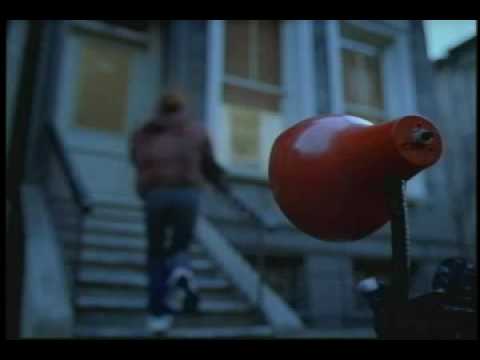
Photo credit, IKEA Canada
<Ahem>
I digress.
Writers are students of story. When we find a story (or when a story finds us), it isn’t long before we’re tinkering. We examine it, carefully take it apart, try to figure out what makes it tick. Why do some things work in certain places but not in others. What is it about a particular story that makes it resonate more than another? Makes us feel more? Is it the clever twist? Or does the story unfold in an unusual way like a puzzle box? Of course we must have compelling characters, too. Someone to root for, someone to jeer for…. But in the end, it all comes down to how all these elements work together. Like your favourite cake recipe: you can tweak the formula, but in the end, you’ve got to have the right combination of flavours and binders—the right chemistry—for the story to work.
“The purpose of a storyteller is not to tell you how to think, but to give you questions to think upon.”
Brandon Sanderson
This week on #TheBookshelf we explore three TV shows whose creators have done fascinating and unusual things with story, from reinventing and combining classic monster storylines, to playing with timelines in epic fantasy, and—in a science fiction story for the ages—exploring the vagaries of time itself.
Join me for a little escape…
Penny Dreadful

Photo credit, Showtime
First up is the delightfully gory, and very explicit, Victorian Gothic horror series Penny Dreadful (27 episodes, originally aired between 2014-2016 on Showtime). I’ve been a fan of horror for a long time, and I’ve read and seen a lot of great stuff, and a lot of shall we say “interesting” stuff (looking at you Afflicted). The creators of Penny Dreadful do what some of the monster movies from the 1940s used to do–toss iconic Victorian Gothic monsters and adventure novel characters together into the same storyline–and they do it exceptionally well. The show takes its name from the sensational Victorian novels containing stories of adventure and the supernatural and which cost…you guessed it…one penny (learn more about penny dreadfuls here!)
I’m tempted here to go into glorious detail about the show, but I know that in doing so I’d be dropping spoilery goodies all over the place, and I’m not about to ruin it for you. So let’s go with the IMDb description of the show: “Explorer Sir Malcolm Murray, American gunslinger Ethan Chandler, scientist Victor Frankenstein and medium Vanessa Ives unite to combat supernatural threats in Victorian London.”
Oh my. Do they ever.
Expect all your favourite monsters and monster hunters–and enough brilliant twists to keep the occasional whiff of campiness at bay. This show was at turns heart-stopping and heart-breaking. The main story follows Sir Malcolm (reportedly inspired by Allan Quartermain, the main character in H. Rider Haggard’s King Solomon’s Mines) and Miss Ives as they try to discover the whereabouts of the missing Mina Murray, daughter and best friend, respectively. But woven into this main story are several other excellent storylines involving Frankenstein’s monster, Dorian Gray, Dr. Jekyll, several Egyptian gods, some witches, and–I’m sure I’m not spoiling anything, because you’re sure to have guessed it–Dracula himself (with an interesting twist on his backstory and some clever fiddling with the mythology, no less).
The series unfolds over three seasons with strong writing, good pacing, and lots of surprises. The cast is stellar–Eva Green does a lot–and I mean a LOT–of heavy lifting in the acting department. Her character is occasionally stiff, like she’s desperately trying not to move too much in case everything she’s holding in spills out. It would be easy to see it as a flaw in the acting, but I suspect it was a deliberate move on the part of the director and actor. I’d be remiss if I didn’t single out Billie Piper and Rory Kinnear for their exceptional performances as wonderfully human characters (no spoilers, Sweetie). (Also, watch for the fabulous Patti LuPone in not one, but two roles!)
I was emotionally wrung out by the end of most episodes–and if that’s not a sign of a good story, I don’t know what is.
As for the finale? Oof. So good.
Why I liked it: Penny Dreadful takes familiar literary monsters and puts them into new situations, with new or expanded lore, giving us broader insights into who they are and why they do what they do. It makes us question what makes a monster and puts new twists on several classic stories with depth, humanity, and ultimately, love.
The Witcher
When it comes to stories of fantasy and the supernatural–while I enjoyed The Hobbit and The Lord of the Rings–I tend to lean more toward urban fantasy and sci-fi. But I’m also a bit of a gamer, so when Netflix announced that they were making a series based on The Witcher character, I was curious. The Witcher was created by Polish writer Andrzej Sapkowski. Sapkowski’s Witcher novels and short stories are incredibly popular in Poland, and the eponymous video games catapulted the series into the international spotlight. In the run-up to this Netflix version, I was particularly intrigued by Henry Cavill’s passion and preparation for the role. So I gave it a try. (The first season of The Witcher consists of eight episodes and first aired on Netflix in 2019. Season 2 is on its way.)

Photo credit, Netflix
Set against a backdrop of elves, mages, and political intrigue, this is a story about destiny and monsters and how neither are ever what they seem. Geralt is a mutant who hunts monsters for money, all the while being labelled a monster himself. More human than the humans who shun him, he really just wants to be left alone. But destiny has other plans…
The show is epic in every sense of the word. The story itself, the strong writing and dedication to the source material, the costumes (I could write an entire blog about the costumes alone), the effects, the incredible cast of strong female characters who fight their way through this world, Henry Cavill’s portrayal of Geralt of Rivia, Jaskier’s cheeky marketing ballad that I cannot get out of my head…I could go on.
But what really sold me was how the Witcher writers handled the timelines. There’s a lot of backstory and worldbuilding that needs to happen here to get a new audience up to speed. Instead of using flashbacks or taking a linear route through hundreds of years of story, three key storylines from three different timelines are cleverly braided together in a way I’ve never seen before. The action moves back and forth through time to develop character and plot, building tension not only in the story itself, but also in the anticipation of the eventual merging of the timelines. One of the ways that they make it work is by showing a scene from one character’s point of view, and then, in a later episode, going back and showing the same scene from a different character’s point of view. You have to just go with it for the first couple of episodes, but eventually, it all makes sense.
Geralt is a man of few words, instead conveying much with his facial expressions, actions, and an oft-used sardonic “hmm…” Shout-out to Henry Cavill, who plays Geralt to perfection, deftly conveying all the tightly-wound pain and the fatalistic humour you’d expect from this character. And while Geralt’s story is the main focus of the show, it is Anya Chalotra’s Yennifer of Vengerberg who just blew me away. Yennifer’s story arc is harrowing, beautiful, and sometimes achingly sad, and Anya’s masterful portrayal of the character is jaw-dropping.
Bonus: If you get chance and can find the accompanying “making of” documentary, it is totally worth it. Go behind the scenes to learn about the mythology, the inspiration, the incredible wardrobe department for the production…and more.
Why I liked it: Clever use of timelines to tell a long and complicated backstory, strong writing and acting, gorgeous to watch.
Dark
Where to begin. Or should I say when to begin.

Photo credit, Netflix
Eldest Son bugged me for months to watch Dark.
(Note to self: when ES recommends that you watch something, do it, but don’t expect him to help you out with any spoilers…#LawfulGood)
What starts out as a crime drama set in the fictional German town of Winden, very quickly reveals itself to be something else entirely. There’s something wibbly-wobbly, timey-wimey about Winden. Especially in that cave.
Stay away from the cave, kids!
(Dark originally aired on Netflix from 2017-2020, there are 27 episodes over 3 seasons and it is in German with English subtitles.)
Where The Witcher braids together three timelines in a fairly linear fashion, Dark bounces through time with gleeful abandon, introducing us to characters at various points in their lives, spanning multiple time periods, and then following them as they move back and forth through time. Shout-out to the casting team who did an incredible job of finding actors to play the same character at multiple points in their lives in such a way that the viewer could recognize the character in every iteration.
According to ES, the creators of Dark, Jantje Friese and Baran bo Odar, originally had two series in mind: one, a crime/mystery/thriller, and the other, a time-travel story. They decided to combine the two and the result was, IMHO, one of the best sci-fi stories I’ve ever experienced. Here, we have a story that includes family drama, crime thriller, and sci-fi. It immerses you in questions about the nature of time, and what you would (or wouldn’t) do for the people you love.
What we know is a drop, what we don’t know is an ocean.
Isaac Newton
Dark is clever. Sometimes, just when it seemed to be getting too clever for its own good and my brain was starting to hurt, something would happen to make me go “Ohhhh, I see what you did there…” At one point in season three, I turned to ES and said “I’d pay money to see how the writers plotted this.” Writing time travel is never not tricky, but in this case? To keep the interconnecting storylines straight, and to do so without a single plot hole? Remarkable. Utterly.
ES and I have found ourselves in so many fascinating conversations about time, nuclear and quantum physics, philosophy, and storytelling, all thanks to Dark. And I promise you, as ES promised me, when you reach the 27th episode, you will look at the Winden family tree that you drew around episode 2, and once again, you’ll go “Ohhhh…I see what you did there” and trust me, it will be glorious.
I cannot wait for Jantje Friese and Baran bo Odar’s next outing for Netflix, the multi-lingual period drama/thriller 1899.
Why I liked it: You know how at the beginning of this blog I mentioned that writers like to take stories apart and study them? Dark is a masterclass in storytelling. The story reveals only what the viewer needs to move forward. It never insults your intelligence. In fact, it trusts that you will keep up–and in the end, it rewards your effort.
Have you watched any of the shows in this week’s post? What did you think of them? Did the stories resonate with you or did they leave you lost in time? Let me know in the comments!
Coming up next week: Join me as I take a leap into the non-fiction end of the pool with a review of Nathan Bransford’s How to Write a Novel.





 WoodvineWrites